
3-1-4-2 Formation: Setup, Strengths & Weaknesses
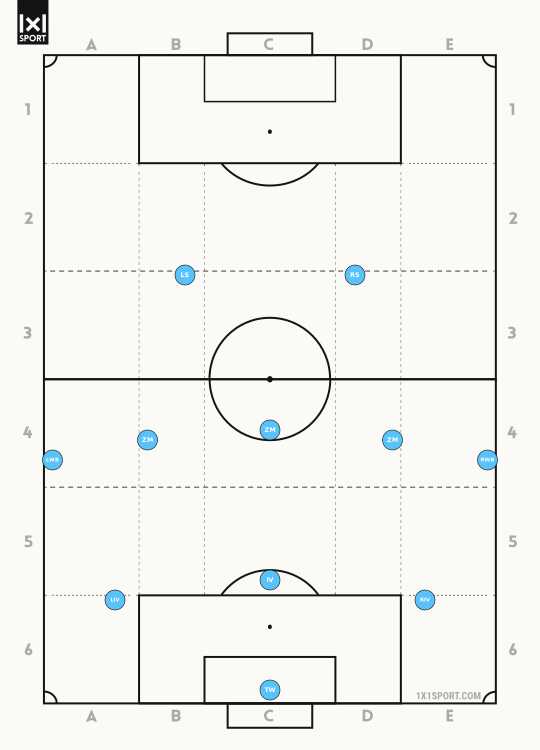
Three at the back, a holding midfielder in front, four in a line, two up top. The 3-1-4-2 is a variant of the 3-5-2: in midfield one player screens and four play in front of him.
Positions explained · Strengths & weaknesses · Set up on the board · Share as PNG
Start for free: enter your email, click the login link, go.
Positions & Roles
- GK – Goalkeeper: Plays behind a back three and has to sweep up balls in behind. In the build-up he is often the fourth man next to the center-backs.
- CB – Three center-backs: The central one organizes, the outside center-backs open up wide and cover the space behind the wingbacks.
- DM – Holding midfielder: The rhythm-setter in front of the defense. Distributes the ball, covers when the eights push forward and closes the center.
- LWB/RWB – Two wingbacks: The width providers along the whole flank. High with the ball, part of the back five without it.
- CM – Two eights: Play in the half-spaces, link midfield and attack and arrive late in the box.
- ST – Two strikers: Work as a pair. One runs in behind, the other comes short and holds the ball up.
Overview
The 3-1-4-2 is a formation with a back three, a holding midfielder, a line of four made up of two wingbacks and two eights, and two strikers. It is a variant of the 3-5-2, instead of “five in midfield”, the numbers show that one of them sits deeper. A 3-5-2 can also be played with two deeper midfielders and a number ten.
This holding midfielder sets the rhythm. He stands in front of the back three, receives the ball from the center-backs and distributes it. Ahead of him the two eights move into the half-spaces and the wingbacks provide the width.
The system puts a lot of presence in the middle and still has width. But it needs two wingbacks who cover the whole flank and a holding midfielder who stays calm under pressure.
Game Idea & Principles
In possession the 3-1-4-2 builds up through the back three and the holding midfielder. The wingbacks push high, the eights occupy the half-spaces. Five or six players are up front, while three center-backs and the holding midfielder cover behind.
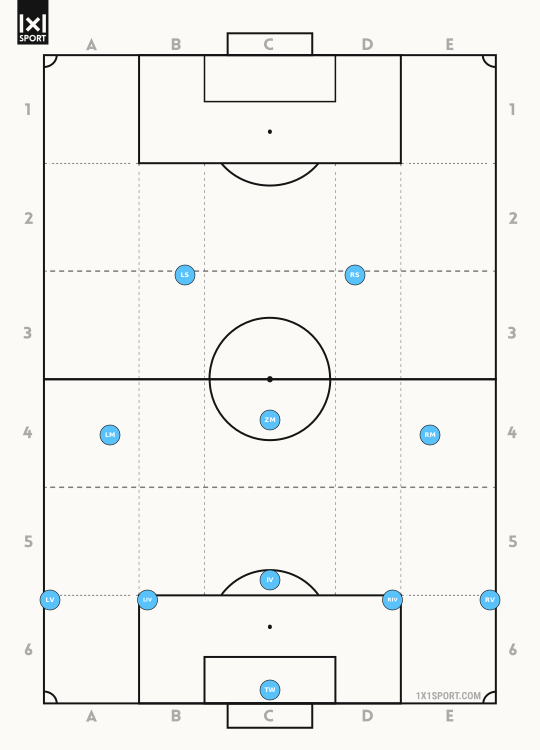
Against the ball the wingbacks drop into the back line and in a settled defensive block the 3-1-4-2 often becomes a 5-3-2. The two eights move alongside the holding midfielder and close the center.
The key is the holding midfielder. If the opponent blocks him, the center-backs have to carry the ball forward or an eight has to drop deep to rescue the build-up.
Strengths and Weaknesses
Strengths
- Stable build-up — Three center-backs and a holding midfielder give many safe passing options in the first phase.
- Presence in the center — The holding midfielder and two eights form a strong triangle in the middle. Against two central midfielders you have an overload.
- Strike partnership — Two strikers occupy the opposing center-backs. That opens space for the eights.
- Built-in switch to a back five — Without the ball the 3-1-4-2 usually becomes a 5-3-2 without anyone changing role.
Weaknesses
- Dependent on the holding midfielder — If the opponent blocks him, the most important link in the build-up is gone.
- Heavy workload for the wingbacks — They cover the whole flank alone. Without enough stamina, gaps open out wide.
- Space next to the holding midfielder — If the eights push up too early, he is left alone. The opponent can counter through the half-spaces.
- Needs tactically mature players — The back three, the wingback role and the holding midfielder require a lot of coordination.
Variants & Transitions
3-1-4-2 → 5-3-2: The wingbacks drop back and the eights move alongside the holding midfielder. The usual shape without the ball.
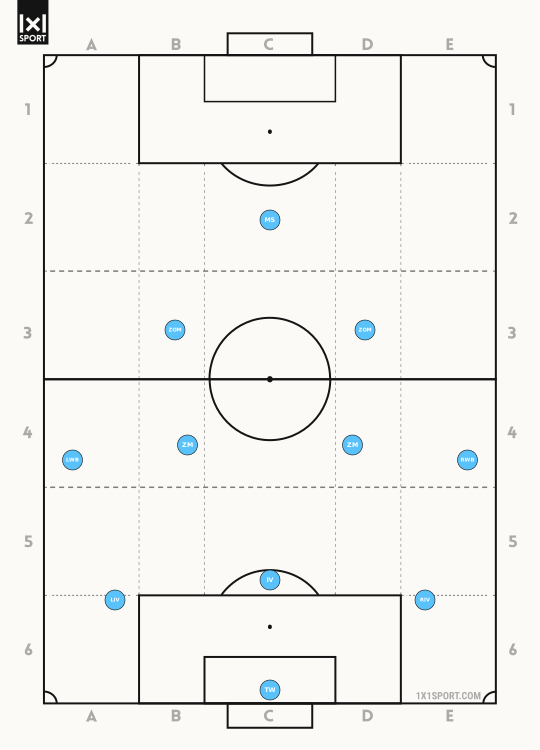
3-1-4-2 → 3-4-2-1: One striker drops as a number ten, one eight becomes the second ten and the other moves level with the holding midfielder. More control, less pressure on the defense.
3-1-4-2 → 3-4-3: One eight pushes up as a winger, one striker moves to the other flank and the second eight joins the holding midfielder. Three forwards, but less control in the center.
3-1-4-2 → 4-3-1-2: The wingbacks become full-backs, one center-back moves into midfield and one eight becomes the number ten. If you prefer a back four, you keep the holding midfielder and the two strikers.
Notable Examples
Antonio Conte — Inter Milan (2020/21): Inter won the Italian title with a back three of Milan Škriniar, Stefan de Vrij and Alessandro Bastoni. Marcelo Brozović played as the central rhythm-setter in front of the defense, Nicolò Barella as an eight and Achraf Hakimi as a wingback. Up front were Romelu Lukaku and Lautaro Martínez. The system is usually called a 3-5-2 – with one holding midfielder behind four players in a line, it is exactly the picture of a 3-1-4-2.
Antonio Conte — Juventus (from 2011/12): From November 2011 Conte repeatedly switched to a 3-5-2, with Andrea Barzagli, Leonardo Bonucci and Giorgio Chiellini in the back three and Andrea Pirlo as the playmaker in front of the defense. Juventus went unbeaten in Serie A that season and won the title.
Where It Fits & Requirements
The 3-1-4-2 suits teams with a composed holding midfielder, two hard-running wingbacks and a well-drilled back three. The two strikers should complement each other. Because of the back three it makes more sense from U16/U17 upwards.
Tips for Grassroots Coaches
Train the holding midfielder under pressure: small-sided games in which he receives from the center-backs and turns or plays on while being pressed.
Decide when the eights may push forward. A simple rule: only one goes into the box, the other stays level with the holding midfielder.
Practice the switch from 3-1-4-2 to 5-3-2 after losing the ball. The wingbacks sprint back, the eights move alongside the holding midfielder. Timing decides how stable you are.
Frequently asked questions about the 3-1-4-2
What is the difference between the 3-1-4-2 and the 3-5-2?
The 3-1-4-2 is a specific variant of the 3-5-2. The 3-5-2 lumps all five midfielders together. The 3-1-4-2 shows that one of them sits deeper as a holding midfielder with four in front of him.
Which position is especially important in the 3-1-4-2?
The holding midfielder has a key role. He links defense and midfield, distributes the ball and covers when the eights push forward.
How do you defend in the 3-1-4-2?
The wingbacks drop into the back line and the eights move alongside the holding midfielder. The 3-1-4-2 becomes a 5-3-2 with two strikers up front.
From what age can you play the 3-1-4-2?
Preferably from U16/U17. The back three, the wingbacks and the holding midfielder need coordination and tactical understanding.
What strikers does the 3-1-4-2 need?
Two strikers who complement each other: one who runs in behind and one who holds the ball up and brings the eights into play.
Formation set — now to the concrete lineup or the set plays. The 1x1SPORT academy delivers the tactics behind the systems.
Set up the 3-1-4-2 on the boardStart for free: enter your email, click the login link, go.